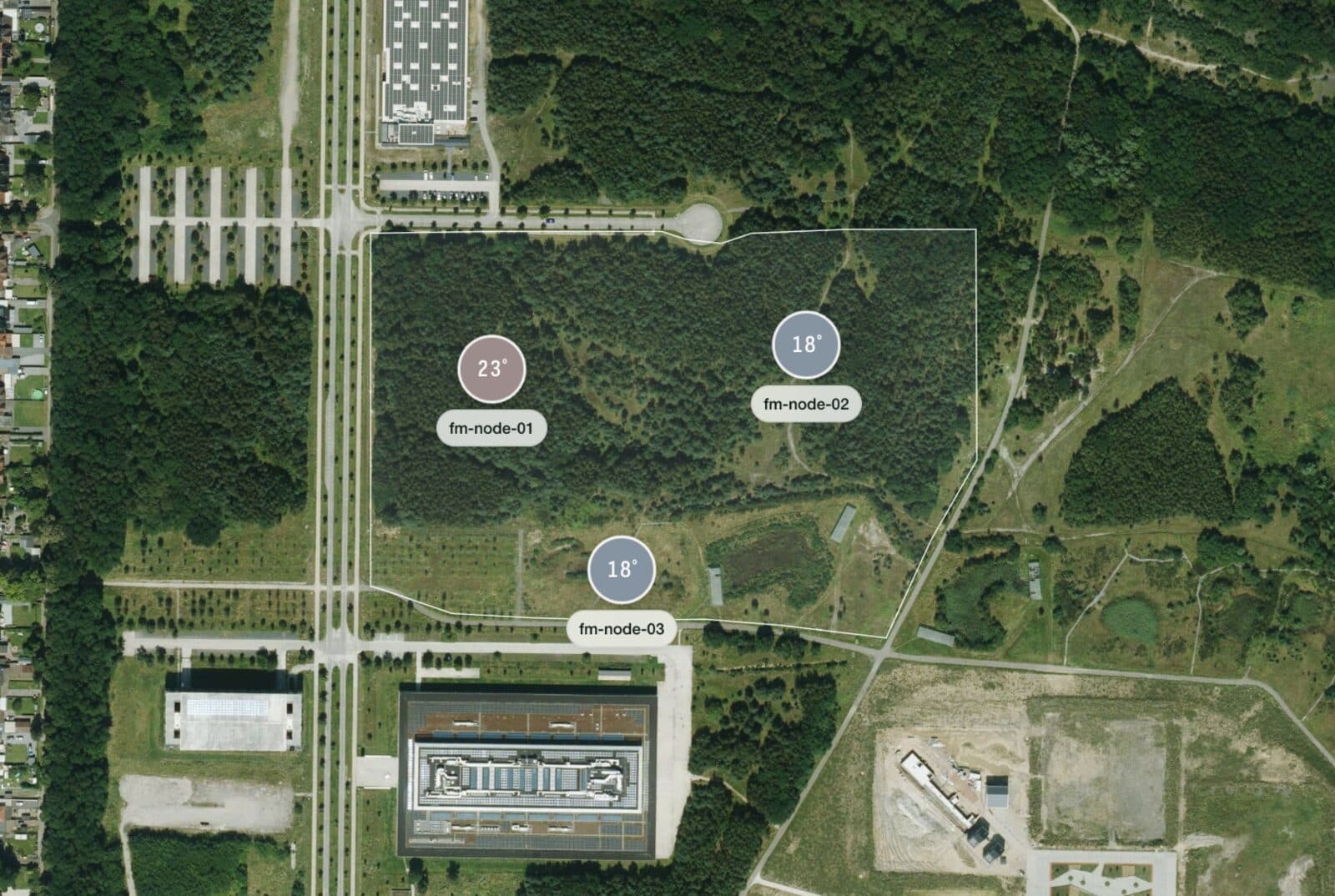
Most of the terrain is not watched.
Small drones are cheap, fly low and are hard to see. Radar and patrols cover the places people already watch; the rest of the terrain stays dark.
FieldMesh fills that gap with many cheap ears instead of a few expensive eyes. It does not replace radar. It tells radar where to point.
How it works
- 1
Listen
Each node carries a microphone and a geophone, and listens on very little power for months on end.
- 2
Decide on the node
When something wakes it, the node classifies the sound itself: drone, gunshot, vehicle, footsteps. It sends the event, never the audio.
- 3
Pass it on
Nodes relay detections over long-range LoRa radio to one gateway. Relay nodes on 2 m masts bridge the long hops along the band.
- 4
Alert at camp
The gateway sends each detection over an encrypted link. Every operator screen shows it on the map within seconds.
- 5
Hand off
FieldMesh says where and when something moved, so radar, cameras and responders know where to look.
Built to be dropped and forgotten
Target design, being validated in field tests.
- Deployment
- Dropped by drone, about 300 g per node, antenna on a self-erecting mast
- Power
- One primary lithium cell, 3 to 5 years
- Radio
- LoRa 868 MHz mesh, kilometres between relay nodes
- Data
- Events only, about 28 bytes per detection on air, encrypted all the way to camp
- Speed
- Seconds from detection to the operator screen
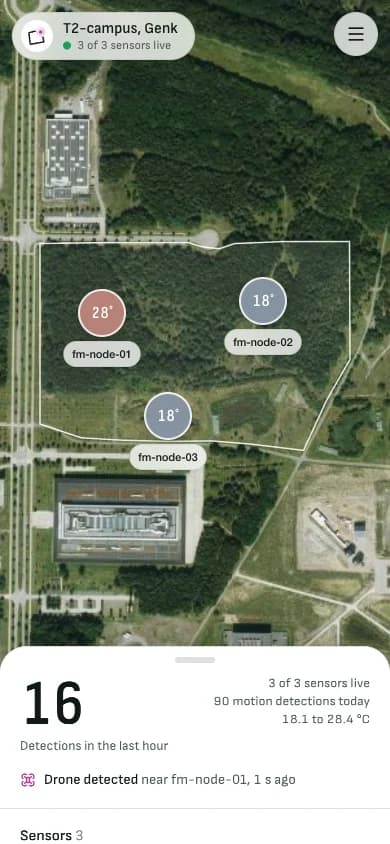
See it live
At FTI Hackathon three sensors stand in the room at T2-campus, and a clap stands in for a drone. In our tests a detection reached the phones in about 1.5 seconds. Scan the QR code on the screen, or open the live demo.